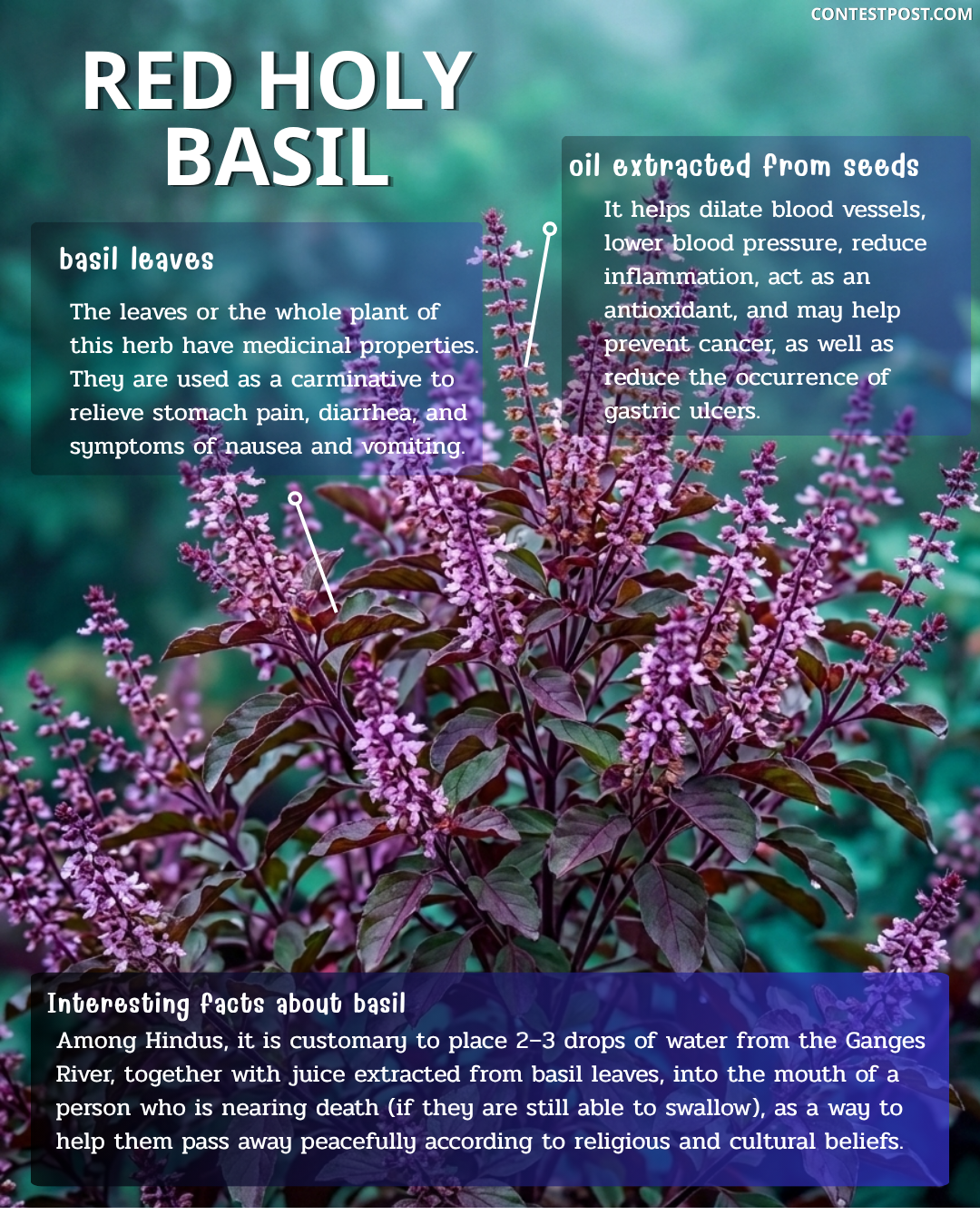
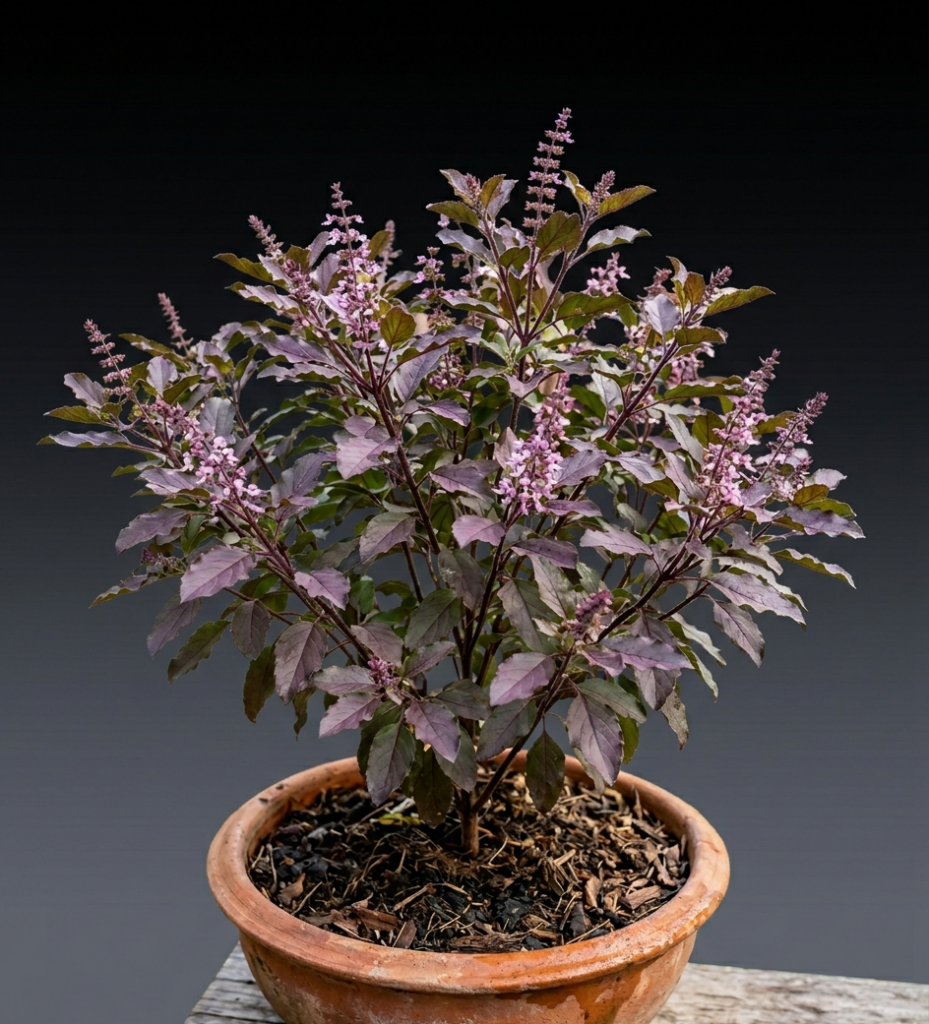
Red holy basil is a small herbaceous plant. The stem and all parts of the plant have a distinctive aroma. The leaves are simple and arranged oppositely, with an oval or elliptical shape. The leaf margins are coarsely serrated, and the color is green mixed with reddish-purple. The inflorescence appears at the tip of the plant. The flowers are pinkish-purple, and the bracts are greenish-purple. The fruit is dry and splits into four small nutlets.
Medicinal Properties Red holy basil
The leaves or the whole plant of red holy basil have medicinal properties. They help relieve flatulence, reduce stomach pain, alleviate diarrhea, and ease nausea and vomiting.
Interesting Information
Holy basil can be divided into two types: green holy basil and red holy basil. Red holy basil is characterized by its reddish-purple color, strong aroma, and spicier, more pungent taste compared to green holy basil. It is more commonly used in herbal medicine than in cooking due to its strong flavor.
In terms of treating skin diseases, red holy basil can help relieve ringworm and fungal infections. Fresh leaves (about 15–20 leaves) are crushed or pounded, and the extracted juice is applied to the affected area 2–3 times a day.
Additionally, in countries such as India and Nepal, holy basil holds cultural and religious significance. It is considered a sacred plant representing Goddess Lakshmi, the consort of Vishnu. Therefore, it is commonly grown at home for use in religious rituals. There is also a tradition of using water from the Ganges River combined with holy basil extract, dropped into the mouth of a dying person to help them pass away peacefully according to religious beliefs.